
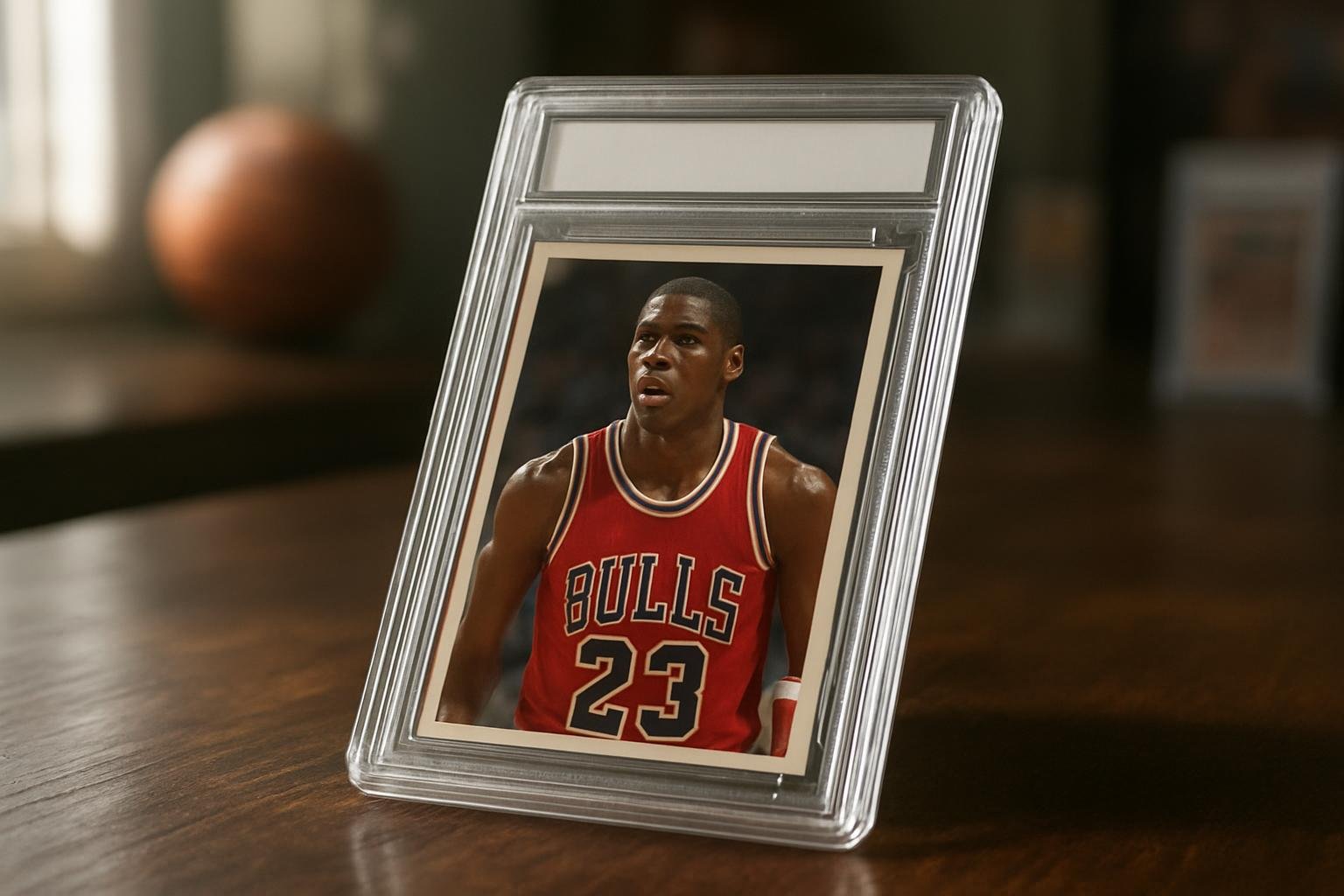
Few sports cards carry the same weight as the 1986 Fleer Michael Jordan rookie. It is the kind of card that exists beyond the hobby, known by longtime collectors, casual fans, investors, and even people who have never opened a wax pack. Over the years, its value has climbed from an important basketball collectible to a true flagship asset in the card market.
Collectors researching market history, graded examples, and long-term demand often start with trusted resources focused on the Michael Jordan Rookie before comparing condition tiers and recent sales trends.
That rise did not happen by accident. The Jordan rookie sits at the intersection of iconic design, historical importance, limited high-grade supply, and a global fan base that continues to grow. In a hobby that regularly cycles through trends, this card has managed to remain relevant through every era of collecting.
For collectors who follow sports cards and TCG markets alike, the card offers a revealing example of how legacy, scarcity, and buyer psychology can combine to create a modern blue-chip collectible.
A card tied to the biggest name in basketball
The starting point is simple: Michael Jordan is still the most recognizable basketball player ever. His impact stretches far beyond the Chicago Bulls, the NBA, or the 1980s. He became a cultural force through championships, highlight reels, endorsements, shoes, and a level of competitiveness that helped define the modern athlete brand.
That broad appeal matters. Many star players have rookie cards, but very few have a rookie card that attracts several different types of buyers at once. Some buyers want Jordan because they grew up watching him. Others want a centerpiece for a basketball collection. Some want a high-end legacy card that is easier to understand than niche regional issues or ultra-rare inserts. The result is a card with unusually deep and resilient demand.
When a collectible can attract hardcore hobbyists and mainstream buyers at the same time, pricing tends to gain strength. The 1986 Fleer Jordan rookie has benefitted from that dynamic for decades.
Why the 1986 Fleer release matters so much
Context is everything. The 1986 Fleer Basketball set holds a unique place in hobby history because it features a remarkable concentration of Hall of Fame rookie cards and key stars. It is one of the most recognizable basketball sets ever produced, and Jordan is clearly its crown jewel.
The card itself stands out visually. The red, white, and blue border gives it instant recognition, while the image of Jordan in midair captures the athletic style that made him famous. The design is clean, bold, and memorable. Collectors often talk about scarcity and grade populations, but visual appeal plays a real role in long-term value. This is a card people want to display, talk about, and chase.
It also represents Jordan’s accepted mainstream rookie card in the eyes of the hobby. That matters because flagship rookie cards tend to attract the strongest and most stable demand over time. Even collectors who own rarer or more exotic Jordan issues often still want the 1986 Fleer because of what it represents.
Supply exists, but elite copies are another story
One reason the card has soared is that its supply is often misunderstood. At first glance, it may not seem especially rare compared with truly scarce vintage cards. Plenty of copies exist, and examples appear at auction regularly. But the part of the market that drives premium pricing is not raw supply. It is top-tier graded supply.
The 1986 Fleer set is notoriously difficult in high grade. Centering problems are common. Print defects, rough cuts, edge wear, and surface issues also show up often. Because of that, many surviving Jordan rookies fall short of elite condition standards.
That creates an important split in the market:
- Lower-grade and mid-grade copies remain expensive because demand is so strong.
- High-grade copies command major premiums because the population thins out quickly at the top.
- Gem-level examples become true trophy assets because supply is so limited relative to buyer interest.
This is one of the key reasons values have moved so dramatically. When collectors compete for the best available examples of an iconic card, the ceiling can rise fast.
Grading changed the entire conversation
The meteoric rise in value is closely tied to third-party grading. Before grading became central to the hobby, card values were less standardized and harder to compare. As grading companies created a common language for condition, the Jordan rookie became easier to price, promote, and sell at scale.
Once collectors could distinguish clearly between a PSA 6, PSA 8, PSA 9, or a gem-mint level copy, the market became more sophisticated. Registry competition added another layer. High-end collectors were not only buying a Jordan rookie. They were trying to own one of the best examples available, often in pursuit of a complete top-ranked set.
That competition pushed premium grades into another financial tier. The market began to treat top-condition copies less like ordinary collectibles and more like rare investment-grade pieces.
Grading also helped open the card to newer buyers. Someone researching a Michael Jordan Rookie can quickly understand why condition matters, compare past sales, and evaluate relative scarcity in a way that would have been much harder in earlier decades.
The power of nostalgia and generational demand
Nostalgia is often dismissed as a soft factor, but in sports cards it can move entire markets. Many collectors who came of age in the late 1980s, 1990s, and early 2000s now have more disposable income than they did when they first dreamed about owning a Jordan rookie. That creates a powerful wave of demand from buyers trying to reclaim a piece of childhood sports culture.
What makes the Jordan card unusual is that nostalgia has not been limited to one age group. Older collectors remember his actual playing career. Younger collectors discovered him through highlight packages, documentaries, sneaker culture, video games, and endless debate over the greatest player of all time.
That means the card keeps refreshing its audience. Instead of fading with a single generation, it continues to gain new collectors who see Jordan as a symbol of greatness, not just a retired star from the past.
Cultural relevance keeps the market alive
Some athletes remain respected after retirement. Jordan remains central. His brand still sells. His image still travels. His career is still the benchmark in basketball debates. Few sports figures have maintained that kind of presence for so long.
This matters because collectible values are heavily influenced by narrative strength. Jordan’s story is easy to understand and hard to rival. Six championships. Five MVP awards. global fame. The Air Jordan empire. The clutch moments. The mythology around competitiveness. Every part of that strengthens the emotional case for owning his most famous rookie card.
Major moments in pop culture have also helped. Projects like The Last Dance introduced Jordan to younger audiences while reigniting interest among older fans. Whenever public attention returns to his career, the 1986 Fleer rookie tends to benefit.
It became a hobby benchmark card
Another driver of value is status. The Jordan rookie is one of the hobby’s benchmark cards, a card people reference when discussing the health of the basketball market as a whole. In that sense, it functions almost like a blue-chip stock inside collecting.
Benchmark cards tend to attract money because buyers feel more confident in their long-term relevance. Even during periods when speculative cards cool off, iconic benchmark pieces often hold collector interest better than trend-driven alternatives.
The Jordan rookie benefits from several qualities that define benchmark status:
- Universal recognition across the hobby and beyond it.
- Reliable transaction history through major auction houses and marketplaces.
- Strong population data that helps buyers understand the market.
- Cross-generational demand from collectors, investors, and sports fans.
- Historical significance tied to one of the greatest athletes ever.
Because of those traits, many collectors see the card as a cornerstone purchase rather than a short-term gamble.
Why price growth can look dramatic
When people talk about the card’s meteoric rise, they are often reacting to headline sales of high-grade examples. Those prices can jump quickly because the top of the market is thin. If only a small number of elite copies are realistically available at any given time, aggressive bidding can produce eye-catching results.
At the same time, even lower grades have benefited from the halo effect of those headline sales. As the most premium examples reach higher levels, collectors who are priced out often move down the grading ladder. That increases pressure on near-mint, excellent, and even lower-grade copies.
This creates a broad value staircase. Not every Jordan rookie reaches record territory, but strong demand at the top can lift pricing throughout the market.
The card’s rise is not only about rarity. It is about being the most desirable version of a collectible tied to one of the most important figures in sports history.
What collectors should watch before buying
Even with its strong long-term profile, buyers should approach the card carefully. Popular cards with high values naturally attract trimming concerns, counterfeit issues, altered surfaces, and over-optimistic raw listings. Due diligence matters.
Collectors should pay close attention to:
- Centering, especially on the front border and image placement.
- Edges and corners, which often show wear more quickly than expected.
- Surface quality, including print specks and gloss issues.
- Authentication and grading from established companies.
- Sales history for the exact grade and holder generation.
It is also worth remembering that this card has different entry points. Not every buyer needs a top-pop example. A lower-grade authentic copy can still offer strong eye appeal and historical significance at a more approachable level.
Will the card keep rising?
No collectible moves in a straight line forever. Markets cool, recover, and reset. But the long-term case for the 1986 Fleer Jordan rookie remains powerful because its core drivers are still in place. Jordan’s legacy is secure. The card remains his defining rookie. Condition rarity at the upper end still matters. And demand continues to come from multiple corners of the hobby.
That does not mean every price point will rise at the same pace. It does mean the card has better structural support than most. In a market filled with short-lived hype, the Jordan rookie continues to stand on historical importance, recognizable scarcity, and genuine collector passion.
For many hobby participants, that combination is exactly why the card keeps climbing. It is not just a basketball card. It is one of the clearest examples of how sports collectibles become cultural assets.
Comments